

Technical superiority and a proven partnership
CDM Smith’s team had extensive experience with GLWA’s plant, allowing for more effective project delivery.
After a new outfall expansion approach in the early 2000s failed during construction, disinfection process upgrades were desperately needed. GLWA turned to CDM Smith for an alternative approach that could provide high value at a low cost. The solution—which utilized existing facilities to provide the adequate wastewater disinfection contact time required by the Michigan Department of Environment Quality—set to deliver an innovative and compliant solution without compromising utility operations.
CDM Smith’s team had extensive experience with GLWA’s plant, allowing for more effective project delivery.
This was GLWA’s first progressive design-build project and adhered effectively to a challenging schedule.
Supplying 30% of Michigan’s population with sewer services meant that the plant had to stay online throughout.
The team used a fluid dynamics model to ensure that contact times could be achieved and system controls would function properly.
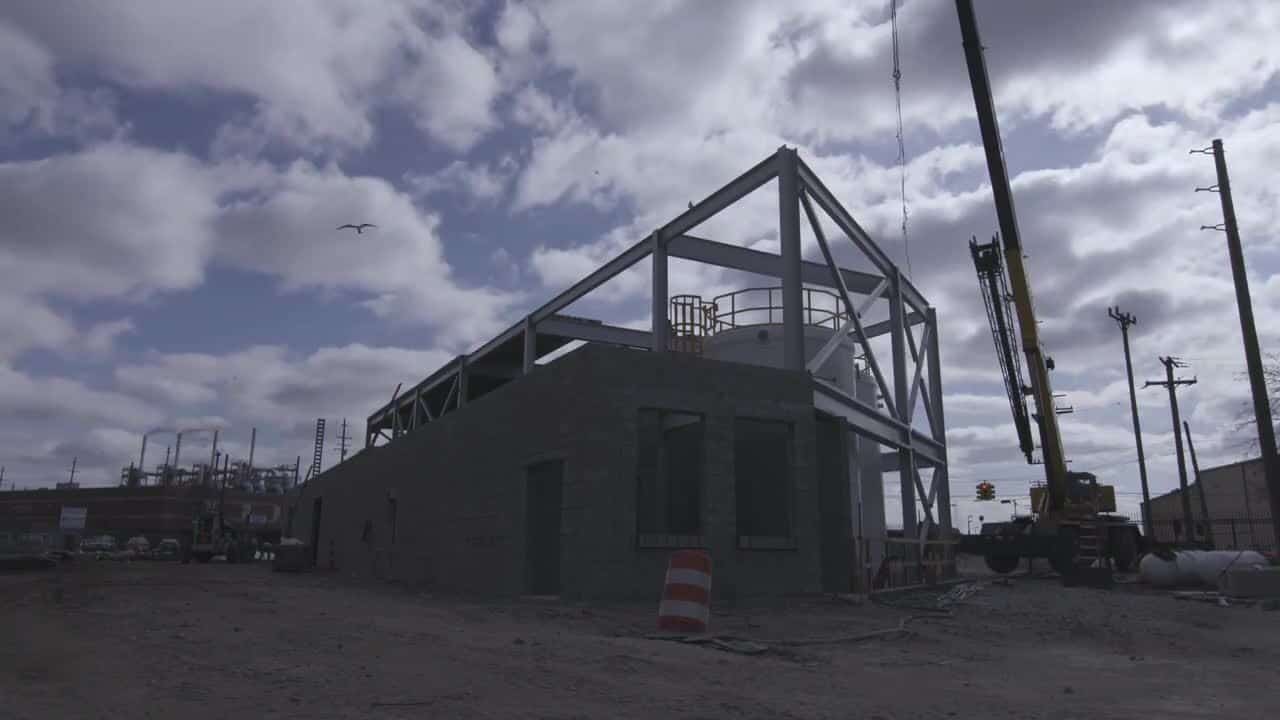
Take a look at GLWA's first progressive design-build delivery project in this timelapse video.
GLWA operates the largest single-site water facility in the country, with many utilities that weren't fully documented. CDM Smith examined four parallel tunnels—each 1,700 feet long and 15x15 feet wide—that are used for water disinfection. Some tunnels hadn't been used in over 40 years, while others had run continuously without inspection. The team inspected them using an ROV and dive team. They found major concerns, especially 8 feet of sediment buildup in two tunnels. The sediment was tested, dried out and properly disposed of to meet regulations and deadlines. This required careful coordination with GLWA staff to maintain safety and avoid disrupting daily operations.
CDM Smith's construction team worked with local contractors throughout the design-build process. They created accurate cost estimates, solved construction challenges and followed a realistic timeline. This teamwork let designers and builders work together to address operability issues and maximize system integration during construction.