

Optimizing biosolids processing
THP uses heat and pressure to break down biosolids, doubling gas generation and cutting solids volume in half.
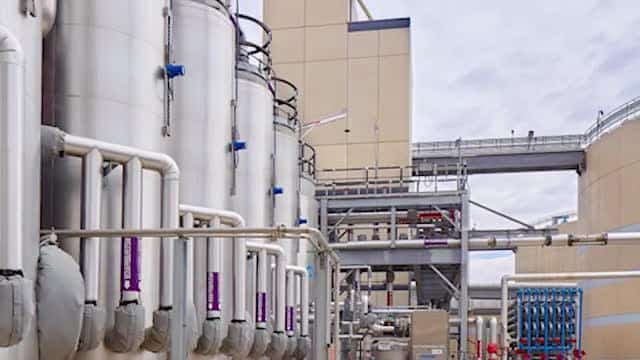
DC Water sought to lower costs, cut emissions and improve energy efficiency at its Blue Plains Advanced Wastewater Treatment Plant. The utility implemented a thermal hydrolysis process (THP), the first in the U.S., to revolutionize biosolids treatment, enhance resource recovery and advance sustainability in urban water management.
THP uses heat and pressure to break down biosolids, doubling gas generation and cutting solids volume in half.
Class A biosolids lowered trucking needs by 50%, reducing congestion and carbon emissions citywide.
Biogas from digestion fuels up to 10 MW of power, supplying one-third of the plant’s energy demand.
$20M is saved annually through power generation and reduced sludge disposal, along with a 41% drop in GHG emissions.
With 30% less grid energy use and class A biosolids now repurposed as fertilizer, DC Water is advancing circular economy goals. “This project brings a new focus on recovering resources,” said George S. Hawkins, DC Water general manager. “The digesters allow us to extract valuable nutrients, energy and carbon from the wastewater and make use of these resources within our service area."
Find out more about how this innovative project helped DC Water turn waste into renewable energy.