Skip to Main Content
logo
Series of soil sample tubes with colored labels in a lab setup.Series of soil sample tubes with colored labels in a lab setup.

Inside PFAS research at our Bellevue Laboratory

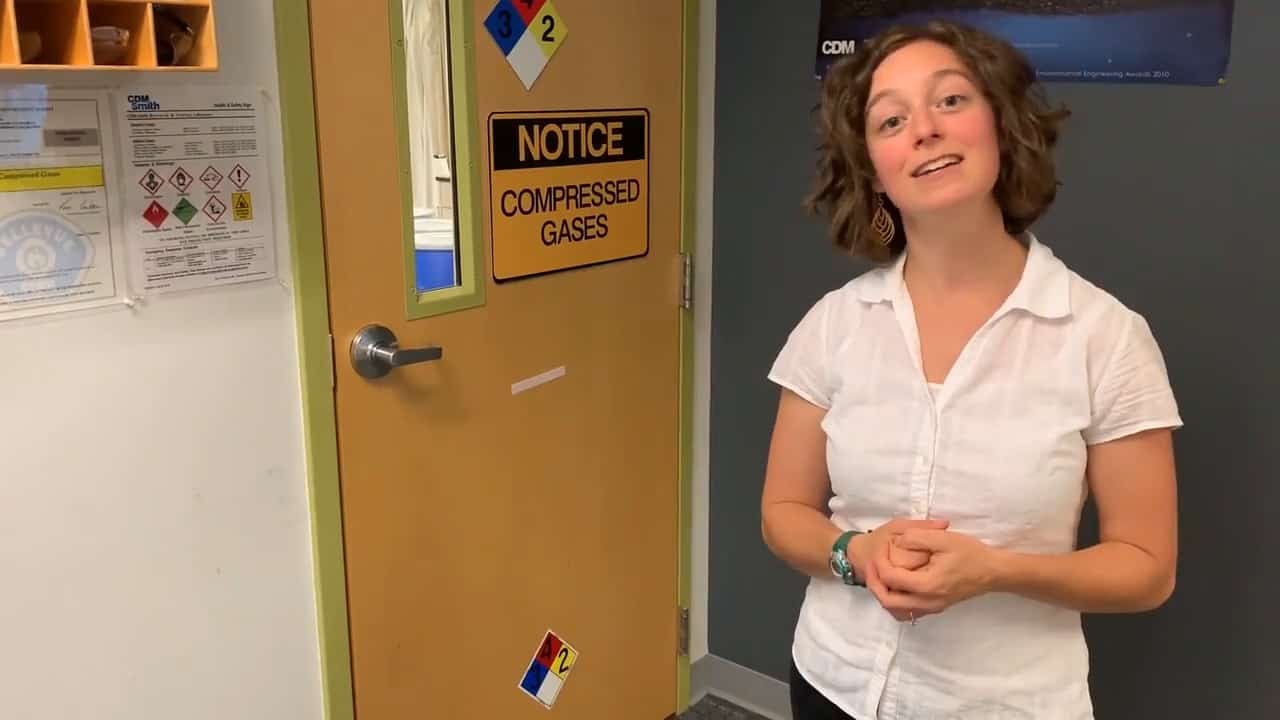
Take a look inside our Bellevue Research and Testing Laboratory, where remediation experts are testing the most innovative solutions to PFAS contamination.

PFAS Research and Development

with CDM Smith environmental scientist Jennifer Hooper 

Video thumbnail

We research the different medias to see what we think would work best.

Paul Ho, Environmental Scientist

PFAS have been around for decades, but figuring out how to remove them from our drinking water is still a young science. Envi­ron­men­tal scientists around the world have gathered to share research on treatment options, lawmakers are inves­ti­gat­ing potential maximum contaminant levels (MCLs), and vendors are introducing new products all the time. It's unlikely that a single solution will fit every cont­a­m­i­nated site, so our remediation experts have been testing various methods and exper­i­ment­ing with combined remedies to figure out what works best for each case.  

In this edition of Breaking Down PFAS, we decided to open the doors to our Bellevue Research and Testing Laboratory and reveal some of the more promising experiments that are revealing key behaviors of this high-profile group of chemical compounds. For a full list of CDM Smith R&D concerning PFAS treatment, download the fact sheet.

Using anion exchange resin to treat PFAS

A team of CDM Smith remediation used rapid small-scale column tests to prove the utility of anion exchange resin for the treatment of PFAS.

More resources on this topic

Sea waves washing foamy water onto a rocky shoreline.
Insight

Using foam fractionation to treat PFAS

PFAS foam may re-concentrate after being released in the environment, and during processes like wastewater treatment, raising the possibility of a new treatment solution.
Landfill with heavy machinery and birds above, near a pond surrounded by tall grasses.
Insight

EPA proposes addition of nine PFAS to RCRA

EPA proposed the addition of nine PFAS compounds to the list of “hazardous constituents” to be considered in Resource Conservation and Recovery Act (RCRA) facility assessments.
A gloved hand places a vial in a laboratory sample tray with numbered slots.
Insight

PFAS fingerprinting and the case for source control

Source control and pretreatment are among the most cost-efficient ways to fight PFAS. Our researchers are finding new, more efficient ways to identify and trace PFAS fingerprints in the environment.
Glowing digital envelopes on a dark background, symbolizing email communication.

Sign up for PFAS updates

Subscribe to our Breaking Down PFAS newsletter to get your fill of breaking news and dispatches from the front lines of active treatment and R&D projects.