

From potable reuse to PFAS removal, the biggest challenges in water engineering require pilot testing to achieve technical breakthroughs and create customized solutions. To learn more, Andrew Beaton interviewed Jill Tedder, who's spent her career working on piloting.
Markets
Priorities
Water reuse expert explains pilot testing benefits
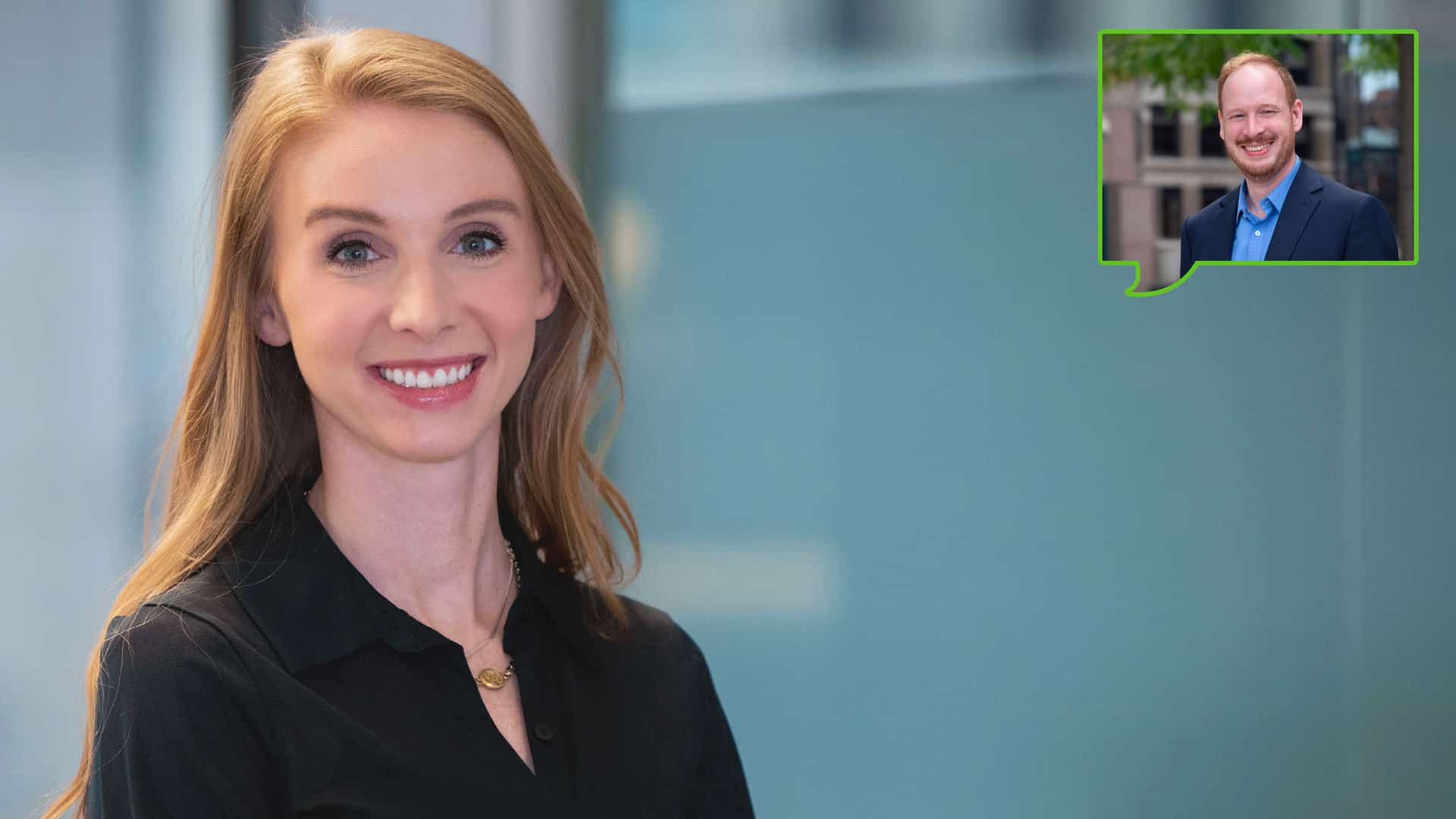
Read the full interview with Andrew and Jill:
Andrew Beaton
What is piloting in terms of water treatment?
Jill Tedder
In the most basic terms, piloting is operating a system that is smaller than a full-scale system. This could mean an individual unit process or a complete treatment train, operated such that we can gain data and insight into the potential full-scale design of a system.
Andrew Beaton
Can you talk about the collaboration that makes piloting successful?
Jill Tedder
It's a team effort for sure. Internally putting together a pilot involves our thought leaders at CDM Smith who are also piloting experts — people that focus on pilots day in and day out, as well as our internal research and development program.
On the external organization side, we collaborate with vendors, industry-leading fabricators of pilots, as well as clients. Together, we are able to collaborate on the pilot protocol, execute the pilot protocol and decide what path we take forward. Typically, one of the main drivers in piloting is to save the client money on the full-scale design, and with this team effort, we're able to agree upon piloting drivers and objectives, get the data, evaluate lessons-learned, and provide an informed cost-effective path forward.
Andrew Beaton
Computer model simulations are powerful tools that we use in a lot of water treatment design projects. But are there any advantages to testing things out in the real world by piloting some of these technologies before we design them?
Jill Tedder
Desktop assessments and computer modeling can only take us so far. We can only learn so much from simulated data. Piloting is full of unexpected surprises that cannot necessarily be predicted through desktop assessments. By handling the water quality surprises prior to full-scale operation, it can save the client money, make start-up and commissioning a much easier process, and mitigate long-term operational issues.
Piloting is not always convenient, it's not always close to home, and you will get your hands dirty. A lot of your days will be full of unexpected surprises, and you'll get messy – you'll probably need to bring a change of clothes to work!
Jill Tedder, water reuse discipline leader, south region
Why is piloting a useful tool for your next water reuse project?
Andrew Beaton
How do you ensure that running a pilot is going to be a good value for a given water utility or another type of client?
Jill Tedder
For each pilot project, we first evaluate the client drivers. Why do they need to pilot? When should piloting be done? In certain instances, the client would like to learn the answer to a specific problem they're experiencing without going full bore into a new full-scale treatment train or a new full-scale unit process.
With that being said, piloting can be a significant cost up front, but the idea is to contribute to a cost-effective future solution. If we were to not do piloting, we might over design a system and over designing is typically a lot less cost effective than optimal design, which can be learned from piloting.
Andrew Beaton
How does piloting help you optimize water treatment or push the limits of what you can do technically for water reuse?
Jill Tedder
We've done extensive potable reuse piloting at CDM Smith. One of the applications is determining the right advanced treatment for the specific application. Commonly today, that is comparing carbon-based treatment to membrane-based treatment.
In some pilots, we’ve compared the full spectrum of advanced treatment options. On others, we've focused on more specific applications like pathogen assessments or gathering data for quantitative microbial risk assessments in order to understand how much each unit process is removing pathogens to get to the final target goal.
We are also able to apply some of our new analytical capabilities or novel monitoring technologies such as qPCR. We've done a lot of work in field scale qPCR. In general potable reuse, pilots tend to bolster the public acceptance of potable reuse, something that has historically been a bit of a controversial topic.
Andrew Beaton
Do you see the public acceptance of reuse shifting as more of this piloting is done and more projects are implemented?
Jill Tedder
I do see it shifting and as a matter of fact, most of the new regulations that are coming out in the potable reuse space require either a pilot, a validation period, and/or a demonstration period, which is typically a little bit larger than a pilot. The public are able to come to a demonstration facility, walk through it, see how everything works and they leave feeling pretty confident that their water will be safe to drink.
Andrew Beaton
Beyond reuse, what are other areas of water treatment where piloting is essential?
Jill Tedder
One of the biggest areas is PFAS. We have done a lot of ground-breaking piloting work on PFAS removal, and while I can't say that this is necessarily my personal experience, but CDM Smith has piloted both the established treatment technologies for PFAS, those being media and membranes. We know that not all media products are created equally, so we've been able to pilot to compare one media product to another media product. We've also been able to pilot to establish membrane performance in PFAS removal, which ultimately led to the construction of one of the first PFAS removal treatment based reverse osmosis facilities in the United States.
Another application of piloting in the water treatment space is pretreatment of high strength wastewater from breweries. Typically, breweries have high strength wastewater that needs to be pretreated before it can be disposed of, and they also need a small footprint solution. We have piloted the anaerobic membrane bioreactor technology to help breweries reach their sustainability goals, with the added benefit of a small footprint and biogas production that they can then use for beneficial purposes.
Andrew Beaton
You and your colleagues do a ton of water piloting. Why are you and all the folks at CDM Smith so passionate about this work?
Jill Tedder
Piloting is intriguing to an engineer because it serves several purposes at once and engineers love efficiency. We are able to evaluate the feasibility of a certain treatment process for a specific water quality challenge. At the same time, we are able to confirm the design criteria for a full-scale system and/or to provide the data needed for regulators to approve a system or grant a waiver for a system. We're able to confirm operational scenarios and the envelope of operational constraints that will inform the full-scale project and ultimately ensure a cost-effective path forward.
Andrew Beaton
What advice would you give to a junior engineer interested in piloting?
Jill Tedder
I think the biggest thing is jumping at each opportunity that's given to you. You know, piloting is not always convenient, it's not always close to home, and you will get your hands dirty. A lot of your days will be full of unexpected surprises, and you'll get messy – you'll probably need to bring a change of clothes to work!
In the long run, piloting is so beneficial for your engineering experience. You're able to see things with your own eyes and you're able to push equipment to the point of malfunctioning, so in some sense, you're able to “play around” with the pilot itself. Sometimes our end goal is to "break" it. Getting involved when you're younger really paves the way to be a good designer with a solid foundation.