

Water and environmental solutions
Advanced treatment technologies, emerging contaminants (including PFAS), indirect and direct potable reuse, biofiltration, anaerobic membrane bioreactors, and alternative disinfection methods.
We believe innovation goes beyond ideas, tools and technologies. It’s the intersection of rigorous research, practical engineering and real projects. With a willingness to challenge the status quo and a curiosity for the unknown, our research is turning today’s ingenuity into tomorrow’s practical and sustainable real-world solutions with a clear focus on redefining industry standards while helping our clients stay ahead of the curve.
in total program investments
active projects
team members working on R&D projects
Our commitment to innovation—rooted in a longstanding culture of research that began with our founders—defines how we work and drives us to explore new technologies, methodologies and solutions, creating a seamless bridge between concept and application. Our state-of-the-art CDM Smith laboratories are the cornerstone of our R&D strategy, where we advance knowledge through bench and pilot scale testing to determine feasibility or validate a concept, optimize a technology or its use, troubleshoot real-world problems, and deliver evidence-based recommendations and practical breakthroughs. This thinking is not only shaping the future of engineering and science, but also helping clients meet regulatory requirements, improve efficiency, support societal wellbeing and public health, and achieve goals in areas that matter most.
Advanced treatment technologies, emerging contaminants (including PFAS), indirect and direct potable reuse, biofiltration, anaerobic membrane bioreactors, and alternative disinfection methods.
Reimagining roadways and mobility systems through dynamic traffic tools, AI driven video detection, tolling algorithms, immersive reality applications, and technologies that support safety, efficiency and quality of life.
Renewable energy strategies, emissions reduction, waste-to-energy conversion, water reuse and climate resiliency planning.
AI-driven solutions including automation, energy optimization, advanced modeling, augmented and mixed reality, and data enabled decision support.
Our three in-house laboratory facilities are at the heart of our research efforts and form the backbone of our innovation engine—validating new technologies, reducing risk and accelerating the path from research to implementation. These laboratories are places where emerging technologies are stress‑tested, refined, and prepared for full-scale deployment, ensuring solutions are ready for real-world conditions. However, they play a much bigger role beyond supporting research.
Our lab facilities and the experts who staff them are also working directly with clients to inform tailored solutions to specific project challenges. We are applying a broad range of independent analytical testing and small-scale piloting to create the data, and more importantly, the science-based insights, clients need to select the appropriate technology or make the best decision possible in support of a variety of different types of work, including:
R&D is part of our history and has been embedded in CDM Smith since its founding when early pioneers began advancing new engineering approaches in water, transportation, and environmental practice, establishing our longstanding culture of evidence-driven technical innovation
Brandie Cookston
Director of Technical Advancement
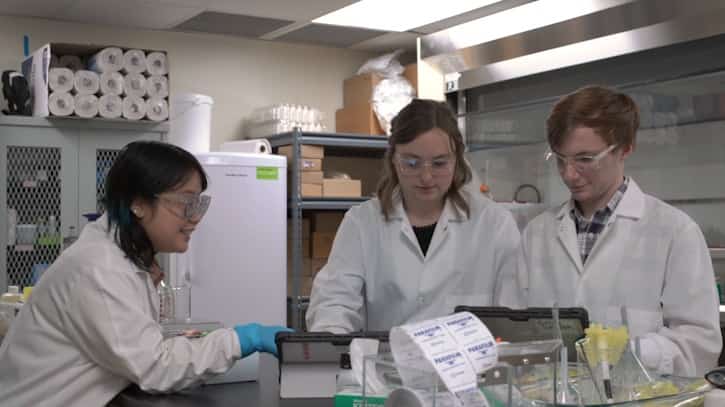
USEPA has set limits on more than 90 contaminants within drinking water and monitors about 30 additional unregulated compounds. Since no two sources are the same and the Earth is covered in roughly 1.3 billion cubic kilometers of water, how do we address contamination with lasting solutions? Welcome to the Bellevue Research and Testing Laboratory, a CDM Smith resource that provides customized treatability studies and research and development for wastewater and drinking water treatment. The lab, equipped with innovative tools and led by world-renowned scientists, offers flask-to-field solutions tailored to clients’ specific needs. This video is your invitation to the future of remediation.
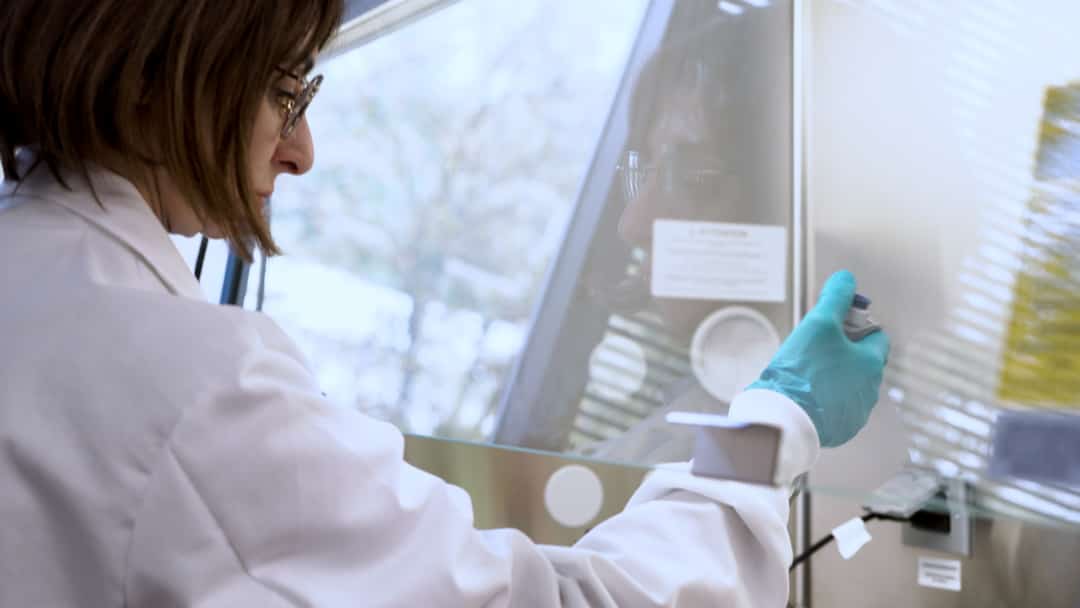
Rasha Maal-Bared talks about microbiology, conducting experiments to monitor bacteria, pathogens, and viruses while expanding into PFAS research. She highlights exciting projects with the Los Angeles Department of Water and Power, emphasizing California's leadership in water safety regulations. She also discusses the long history of non-potable water reuse for agriculture and industry, while addressing the challenges of science communication. She discusses a project on low pressure membranes, which are often overlooked in regulations, and has introduced a portable PCR to expedite testing.
We take a collaborative approach to research, partnering nationally and internationally with clients, universities, not for profit research foundations, government agencies, and industry organizations. Through internal investment and external research funding, we are advancing promising ideas across the spectrum of infrastructure and environmental challenges while also inspiring and building the workforce of the future.
We love collaborating with passionate individuals and organizations. If you want to talk about potential projects, reach out to our experts. If you're interested in joining our team, check our careers page for open positions or internships.