Upgrading Seattle’s Transit System with a Complete Corridors Approach

Seattle is one of the fastest-growing big cities in the United States, experiencing a population boom that brings with it an increased need for faster and more reliable public transportation options. To manage the forecasted population growth, the Seattle Department of Transportation (SDOT) and King County Metro have implemented seven RapidRide bus rapid transit (BRT) lines and several other corridor enhancements including lighting improvements, sanitary sewer and stormwater upgrades, better pedestrian and bicycle access, pavement rehabilitation and improved traffic operations.
“Complete corridors are all about integration—incorporating all the current and future needs within a community,” says CDM Smith’s transportation planner Alison Townsend. “SDOT has been forward-thinking in envisioning all of those elements and making sure the project coordination efforts are happening during the planning phase to ensure maximum savings in cost, schedule and work efforts. The end result is improved transit speed, reliability, comfort and visibility along a complete corridor,” she says.
Prioritizing safety & Brt elements
Seattle is firmly focused on its Vision Zero goals, aiming to end traffic deaths and serious injuries on city streets by 2030. To achieve this, the city needed to ensure slower travel speeds, reduced conflict points, and increased safety standards for pedestrians, bicyclists and other vulnerable road users.
“Our project team recognized that accommodating all modes of travel while developing bus lanes would not be practical given the limited right-of-way and proximity of buildings along the corridor,” says Tim Sorenson, transit and mobility expert. “So working with our stakeholders, we identified a parallel greenway on a safer, calm residential street that would allow cyclists to move off Delridge Way without increasing travel time,” he says.
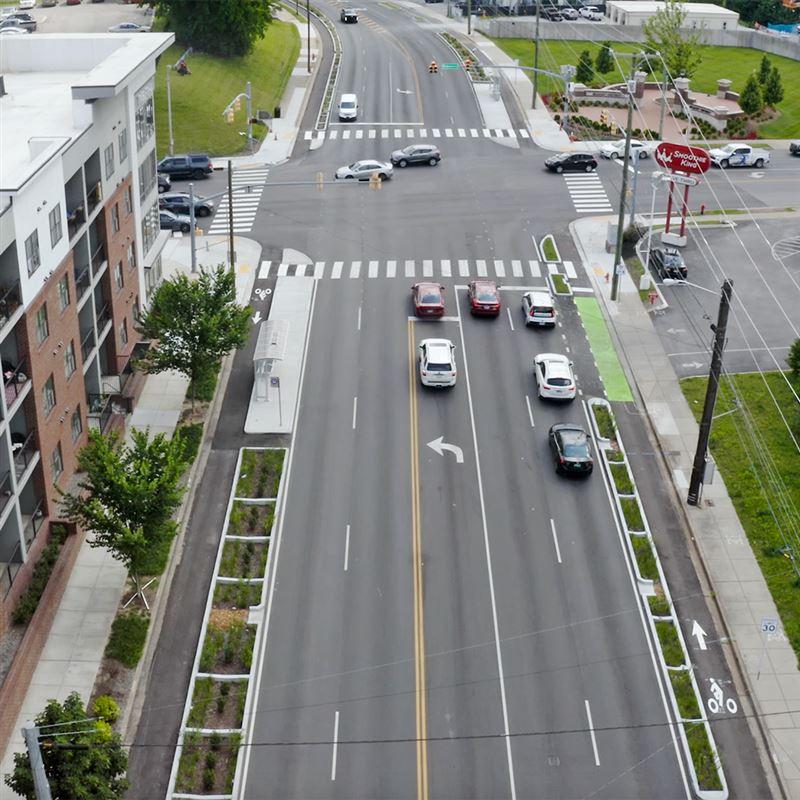
Designing within the complete corridor framework, CDM Smith’s experts also installed speed cushions to help indicate cyclists’ priority and control vehicle speeds. Narrow, 10 to 11-feet lane widths with raised landscaped medians were constructed in high-traffic urban settings to reduce vehicular speed via a “pinch point”, and intersection curb-bulb outs were utilized to protect pedestrians and provide better sight lines. CDM Smith worked to include as many intersection curb-bulb outs as possible along the corridor to maximize the safety benefits and reiterate the priority for pedestrian right-of-way.
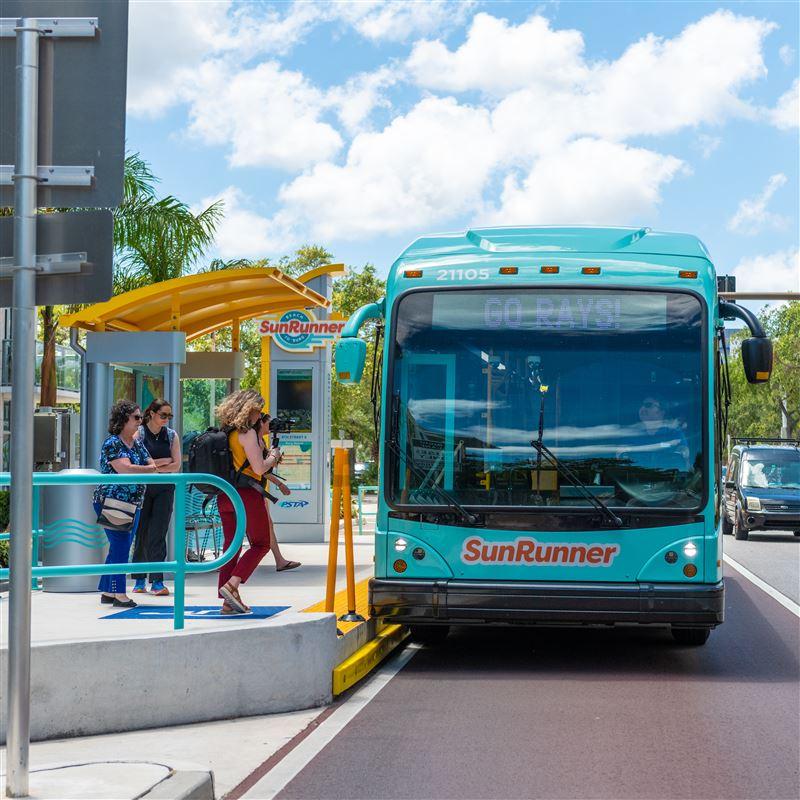
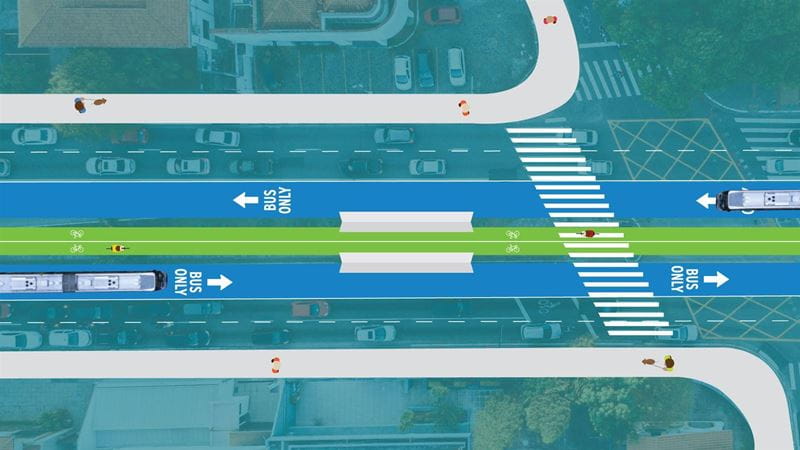
The team prioritized several BRT elements aimed to improve safety; one was the inclusion of 9-inch curbs to allow for near-level boarding for riders with shopping carts or wheelchairs. These raised curbs help to reduce the gap between the bus and the docking platform, creating a safer, more comfortable, and faster boarding process. Peak-hour Business Access and Transit (BAT) lanes also provided dedicated curb lanes for transit and right-turning vehicles during the busiest times. Transit Signal Priority allowed for buses to move ahead of the general traffic at red lights and provided more efficient operations at a higher capacity.


barrier-breaking utility coordination
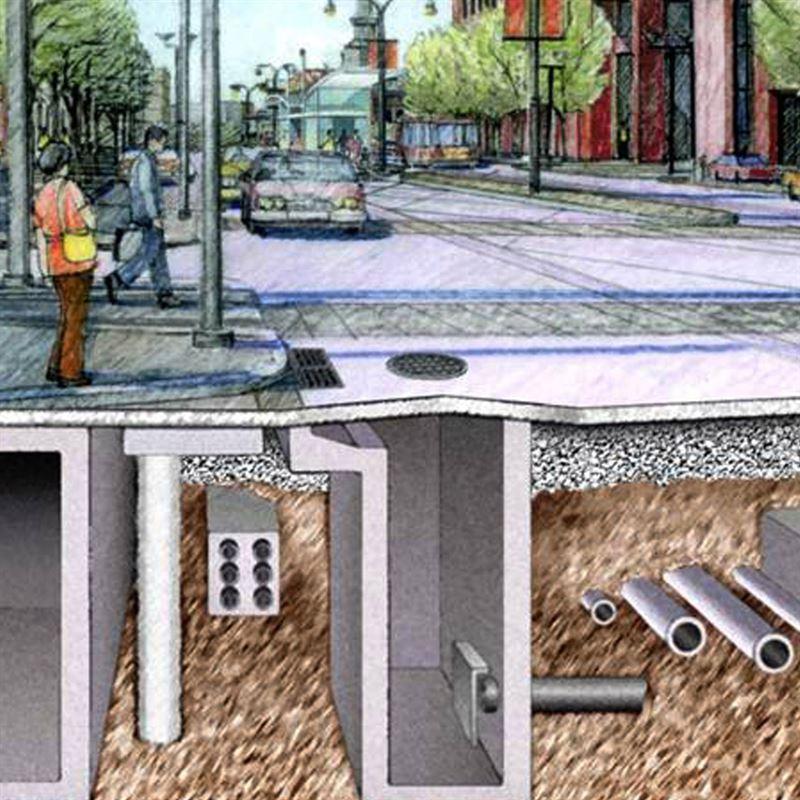
In addition to the roadway and pedestrian improvements, there were many utility considerations and improvements included in Delridge.
To accommodate planned development in the corridor, new sewer mains and laterals were included, drainage infrastructure was improved and 110-year-old lead pipes were mitigated and re-designed. The project also included replacement of lighting infrastructure to minimize cumulative impacts like light pollution and better illuminate bus routes for vehicles and pedestrians.
Various geotechnical data was also compiled for the design of pole foundations, utility structures and pavement. CDM Smith compiled subsurface information by accessing the Washington State Department of Natural Resources (DNR) Geologic Information Portal and reviewing its online GIS-based database of archive borings. During the construction phase, the team used this GIS database to support cost-effective construction and claim evaluation. The geotechnical work included in the project helped to ensure the proper design elements were included to promote the utmost longevity of the city’s infrastructure.
“The RapidRide H Line transforms one of our most popular routes into a new resource connecting communities across one of the most dynamic parts of King County,” said county executive Dow Constantine. “It’s an exciting step forward for neighbors, businesses, families, and the next generation of transit users.”



SDOT has been forward-thinking in envisioning and planning for this corridor. The end result is improved transit speed, reliability, comfort and visibility.
meet the complete corridors team



See how we deliver complete corridors