Skip to Main Content
logo
High-angle view of a large water treatment facility with cylindrical tanks and pipes, near a river with a bridge in the background.High-angle view of a large water treatment facility with cylindrical tanks and pipes, near a river with a bridge in the background.

Driving net-zero at DC Water 

DC Water is redefining wastewater treatment with renewable energy and biosolids innovation, creating the world’s largest thermal hydrolysis facility to drive net-zero goals. 

Client

DC Water

Location

Washington, D.C.

Connect with an expert

Man in dark suit and blue tie outdoors, trees blurred in background.
Peter Loomis PE
Biosolids Discipline Leader

Transforming waste into renewable energy 

DC Water sought to lower costs, cut emissions and improve energy efficiency at its Blue Plains Advanced Wastewater Treatment Plant. The utility implemented a thermal hydrolysis process (THP), the first in the U.S., to revolutionize biosolids treatment, enhance resource recovery and advance sustainability in urban water management.  

Optimizing biosolids processing

THP uses heat and pressure to break down biosolids, doubling gas generation and cutting solids volume in half. 

Reducing environmental footprint 

Class A biosolids lowered trucking needs by 50%, reducing congestion and carbon emissions citywide. 

Generating clean, renewable energy 

Biogas from digestion fuels up to 10 MW of power, supplying one-third of the plant’s energy demand. 

Delivering cost and carbon savings 

$20M is saved annually through power generation and reduced sludge disposal, along with a 41% drop in GHG emissions. 

With 30% less grid energy use and class A biosolids now repurposed as fertilizer, DC Water is advancing circular economy goals. “This project brings a new focus on recovering resources,” said George S. Hawkins, DC Water general manager. “The digesters allow us to extract valuable nutrients, energy and carbon from the wastewater and make use of these resources within our service area." 
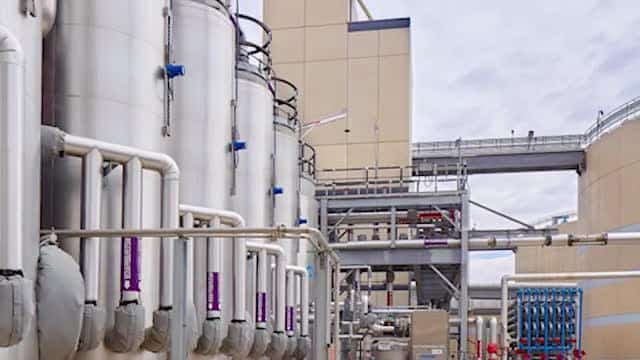
Video thumbnail

Unlocking energy potential through thermal Hydrolysis

Find out more about how this innovative project helped DC Water turn waste into renewable energy.

Curious to learn more?

Connect with an expert to find out how we delivered this project.

Man in dark suit and blue tie outdoors, trees blurred in background.

Peter Loomis

Biosolids Discipline Leader

Peter specializes in water and wastewater treatment plant planning, design and construction management, as well as system planning, permitting and alternatives analysis.

See more projects in this region

Field of sunflowers with a landfill covered in black tarp in the background.
Newton, North Carolina

Reaping the rewards of industrial ecology

Aerial view of a highway interchange with overpass and surrounding greenery.
Tifton District, Georgia

20 years of roadway revolution with GDOT

Interior of a large tank with workers and beams of light shining in.
Nashville, Tennessee

Renewing Nashville, one sewer pipe at a time 

Glowing digital envelopes on a dark background, symbolizing email communication.

Subscribe to The Energy Source

From renewable energy options to building electric vehicle infrastructure and beyond, our experts share the latest developments in the field.